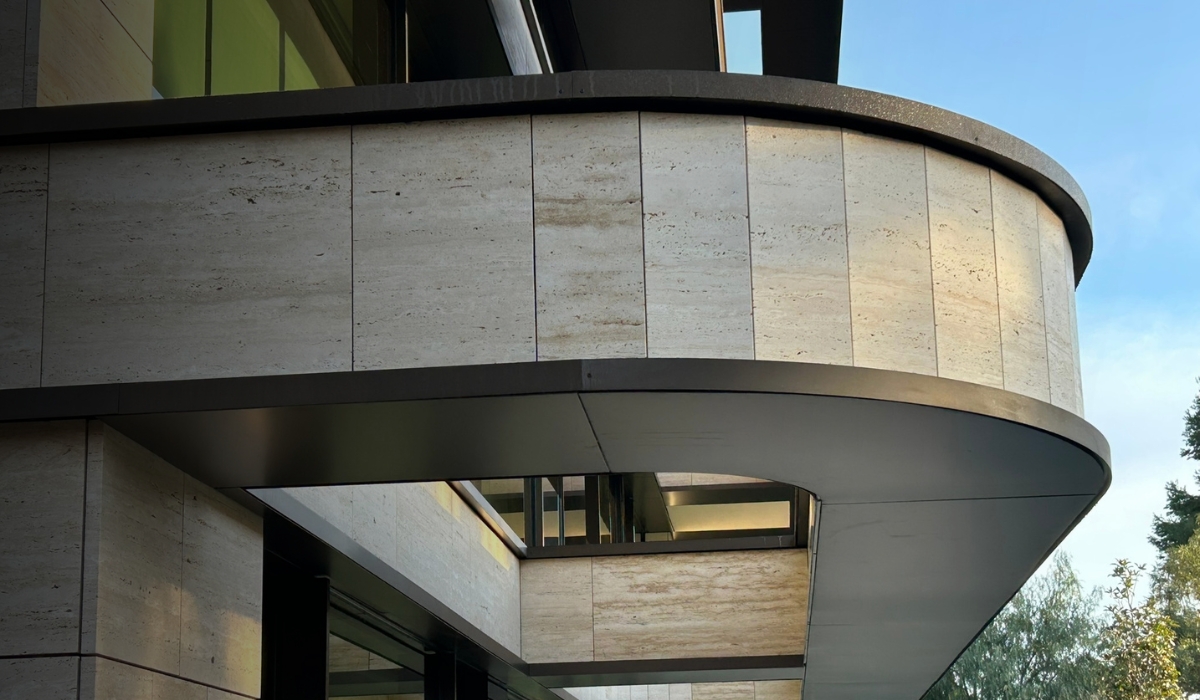
A building's facade is much more than just its exterior appearance. It's the first line of defense against the elements, directly impacts energy efficiency, and plays a crucial role in the building's longevity. Understanding the secrets of a facade allows us to see why good design and proper execution make all the difference between an efficient building and one plagued by maintenance, comfort, or energy consumption problems.
In this article we discover what factors make a facade truly efficient and how solutions such as ventilated facades contribute to improving the long-term performance of the building.
What are the secrets of an efficient facade?
There is no single factor that determines the good performance of a facade. Success depends on the combination of design, materials, insulation, construction system, and installation.
These are some of the main facade secrets that architects and engineers take into account in every project.
1. A design adapted to the environment
Each building is exposed to different climatic conditions. Orientation, wind, rain, solar radiation, and humidity all directly influence the behavior of the facade.
An efficient design takes into account aspects such as:
- The orientation of the building.
- Sun exposure.
- Wind loads.
- The climate of the area.
- Integration with the environment.
Properly planning these factors helps improve interior comfort and extend the lifespan of the building envelope.
2. Quality thermal insulation
Insulation is one of the elements that most significantly impacts the energy efficiency of the building.
A properly insulated facade allows:
- Reduce heat loss in winter.
- Limit overheating in summer.
- Reduce energy consumption.
- Improve interior comfort.
- Reduce emissions associated with air conditioning.
When insulation is combined with a ventilated facade , thermal performance can be significantly improved thanks to the ventilated air chamber.
3. The importance of ventilation
One of the great secrets of the modern facade is humidity management.
The air chamber present in a ventilated facade promotes natural air circulation, helping to evacuate moisture and reducing the risk of condensation.
This principle improves both the preservation of the cladding and the performance of the building envelope.
4. Choose a suitable construction system
The construction system has a direct impact on the safety, maintenance, and durability of the facade.
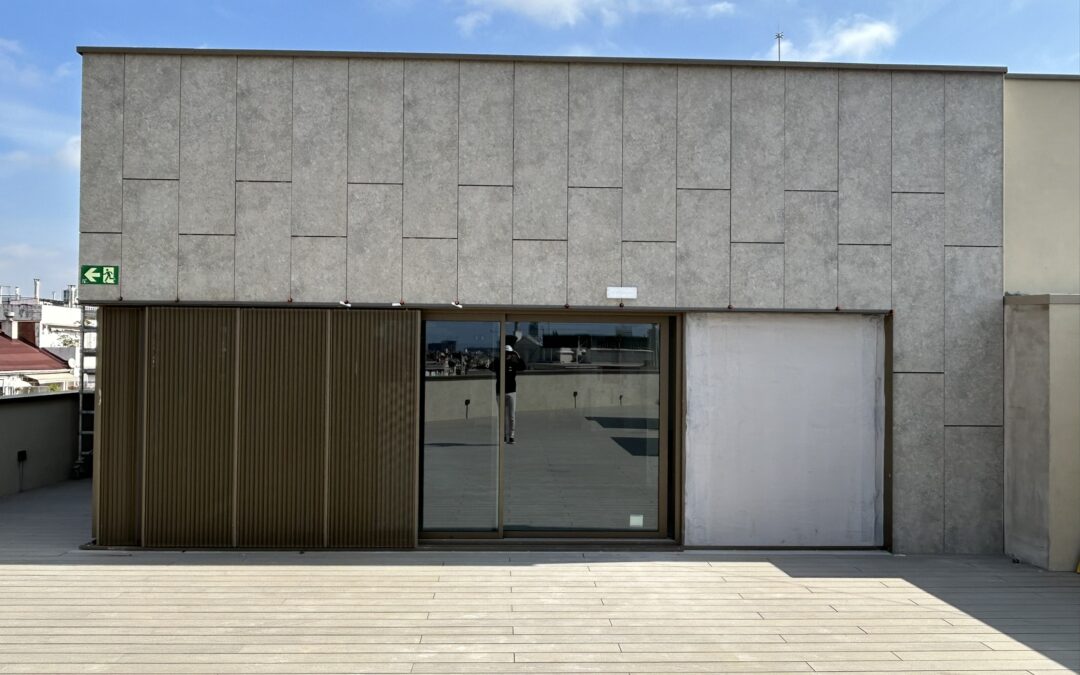
Ventilated facades have become one of the most widely used solutions because they offer advantages such as:
- Greater energy efficiency.
- Protection against moisture.
- Less maintenance.
- Great design freedom.
- Compatible with numerous coatings.
Furthermore, they allow for the renovation of existing buildings through energy rehabilitation actions.
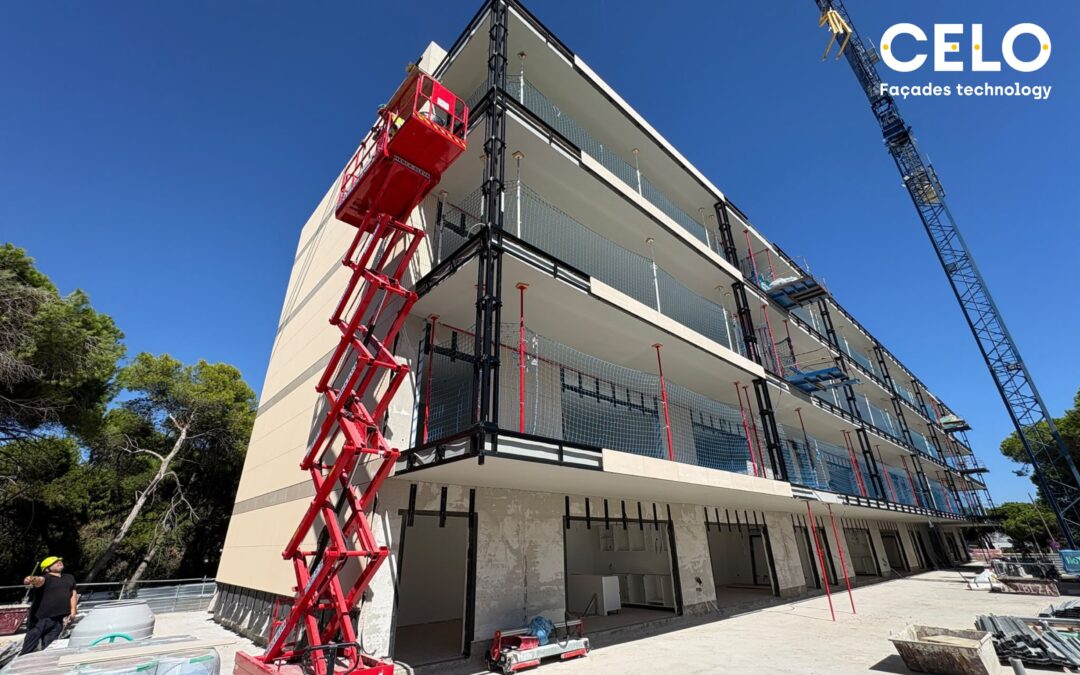
5. The fixing system is also one of the secrets of the facade
Although it often goes unnoticed, the fixing system is one of the most important elements of any ventilated facade.
The metal substructure, profiles and anchors are responsible for transmitting the loads of the cladding to the building structure and ensuring its stability against wind, expansion and the passage of time.
Therefore, each project must have a system specifically calculated according to:
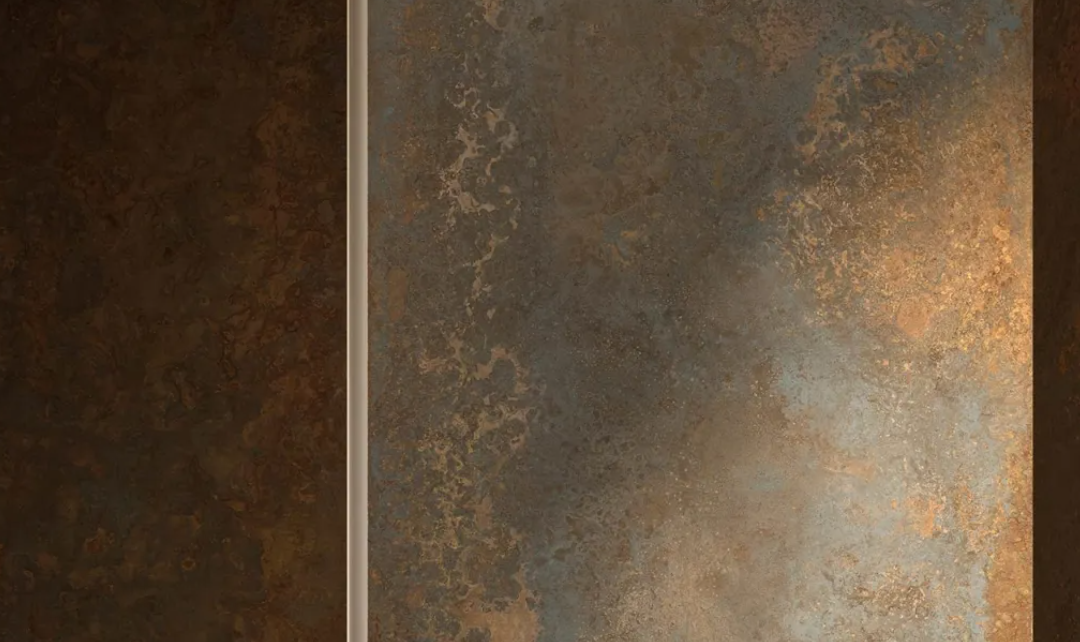
- The type of coating.
- The weight of the plates.
- The height of the building.
- The actions of the wind.
- Current regulations.
At CELO Façades we develop fixing systems for ventilated facades designed to offer maximum safety and durability in all types of projects.
6. Think about durability from the start
An efficient facade should not only offer good performance in the first year, but maintain its performance for decades.
To achieve this, the following is essential:
- Use quality materials.
- Design the construction joints correctly.
- Facilitate water drainage.
- To anticipate the expansion of the materials.
- Ensure proper ventilation.
- Plan for regular maintenance.
Good initial planning reduces future repairs and extends the building's lifespan.
7. Maintenance is also part of an efficient facade
Every facade needs periodic inspections to maintain its performance.
It is recommended to check regularly:
- The condition of the coating.
- The joints and finishing touches.
- Singular points.
- Cleaning the ventilation chamber.
- The condition of the anchors and fixing elements.
Preventive maintenance allows for the detection of minor issues before they become major problems.
Ventilated facade: a solution that brings together all these factors
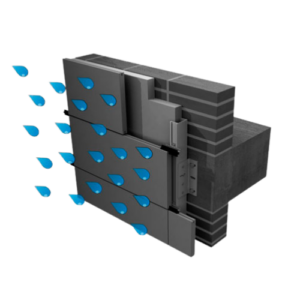
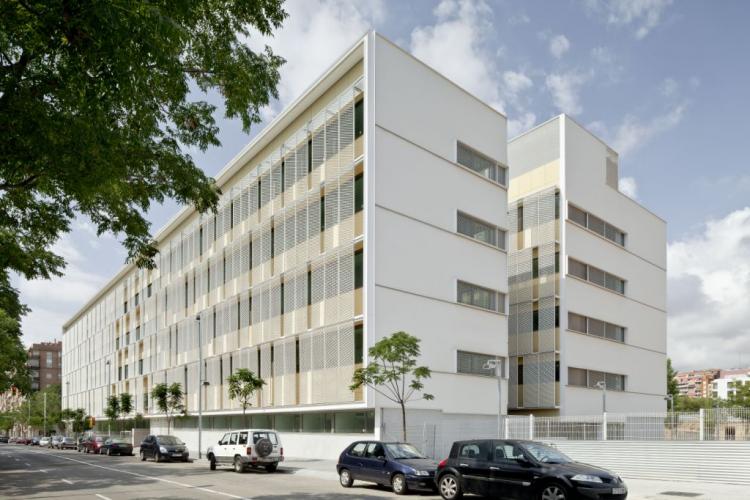
Ventilated facades incorporate many of the principles that define an efficient building envelope.
Thanks to their multi-layered design, they allow you to combine:
- High thermal performance.
- Protection against moisture.
- Excellent performance against expansion.
- Extensive architectural freedom.
- High durability.
- Low maintenance.
For this reason, they have become one of the most widely used construction solutions in both new construction and renovation projects.
Knowing the secrets of the facade means understanding that its performance depends on numerous factors working together: design, insulation, ventilation, construction system and fixing.
Investing in a well-designed solution not only improves the aesthetics of the building, but also increases its energy efficiency, reduces maintenance, and ensures greater durability of the entire building envelope.
At CELO Façades we develop fixing systems for ventilated facades adapted to the needs of each project, helping architects, engineering firms and construction companies to create safer, more efficient and future-proof buildings.
FAQ
What's the secret to an efficient facade?
An efficient facade combines good design, thermal insulation, ventilation, suitable materials, and a properly sized fixing system to guarantee its long-term performance.
What role does insulation play in a facade?
Insulation reduces energy losses, improves indoor comfort, and helps to decrease heating and air conditioning consumption.
Why are ventilated facades more efficient?
Because they incorporate an air chamber that promotes natural ventilation, helps control humidity, and improves the building's thermal performance.
Is the fastening system important?
Yes. The substructure and anchors ensure the stability of the cladding and allow the loads to be transmitted correctly to the building structure.
What maintenance does a facade need?
Periodic inspections are recommended to check the condition of the cladding, anchors, joints and singular points, thus ensuring the durability of the system.